

November Through March Is When a Valley Pool Finally Gets Easy
Nobody covers a pool for winter in Phoenix. You downshift it. Here is what to change, what to leave alone, and why these months quietly decide next summer.
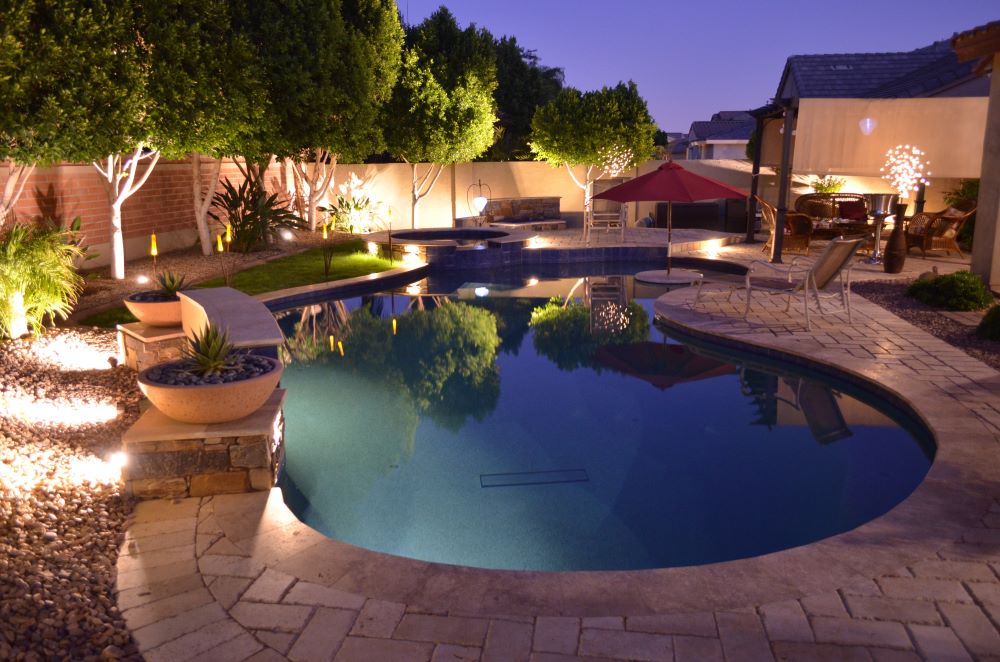
Ask a homeowner in Ohio what they do with their pool in November and you will hear about covers, antifreeze and a tarp that stays on until Memorial Day. Ask a homeowner in Chandler or Peoria the same question and you will usually get a shrug. The pool is right there, still blue, still running, still perfectly swimmable on the warm afternoons that keep showing up through December.
That is the strange gift of owning a pool in the Phoenix area. There is no closing season, only a long stretch of lower demand where the water finally stops fighting you. The mistake most Valley owners make is treating those months as a break and walking away entirely. What the cool season actually offers is the cheapest, easiest window of the year to get everything right, and the state your pool is in come April is decided almost entirely by what you do between now and then.
A Valley Winter Is Not Really a Winter
Water temperature in a Phoenix pool typically settles somewhere in the fifties and sixties through the coldest stretch, and it rarely stays there for long. Warm afternoons pull it back up, clear desert nights drop it again, and the swing between the two is often larger than the swing between one month and the next. That constant motion is what makes local cool season care different from anything you will read in a general pool guide written for a four season climate.
Cold water changes the rules in your favor. Chlorine lasts dramatically longer because there is less sun and less heat to destroy it. Algae struggles to grow. Bather load drops to almost nothing. All of that means less chemical, fewer hours of pumping and far less time with a net in your hand. What it does not mean is that you can ignore the pool for four months, because a few specific things still need attention and one of them can genuinely damage equipment.

What Actually Changes When the Water Cools
The temptation in November is to change everything at once. A better approach is to adjust the two things that genuinely respond to temperature and leave the rest of your routine alone. Overcorrecting is how people end up with a green pool in February, which is an embarrassing thing to explain.
Pump Run Time Comes Down, Not Off
Cold water needs less turnover, so the long summer schedule is genuine waste once temperatures drop. Cutting run time meaningfully is sensible, but shutting the pump off for days at a time is not, because stagnant water goes bad in any season. A reasonable cool weather approach looks like this:
- Reduce total daily run time in stages rather than all at once, watching water clarity as you go
- Shift the schedule so the pump runs during the warmest part of the afternoon
- Keep at least one full turnover happening every day
- Leave any freeze protection setting on your automation enabled, even if it seems unnecessary
- Raise run time back up temporarily after a windy day or a rare winter storm
Chemistry Slows Down and Gets Cheaper
Chlorine demand falls sharply in cold water, so continuing to feed the pool at a summer rate will push levels higher than they need to be and slowly build up stabilizer along with them. Test less often but do keep testing, because pH tends to drift upward in cool weather and a high pH quietly encourages scale on your tile even when the water looks perfect. Cool months are also the right time to correct anything that got out of range over the summer, including a partial drain and refill if dissolved solids have climbed too high. Doing that in January instead of July means less evaporation, less stress on the finish and a far more comfortable afternoon for whoever is holding the hose.
The Leaf Drop Nobody Warns You About
Newcomers assume the debris season ends when summer does. In the Valley it does the opposite. Many of the trees planted around older Phoenix pools are not desert natives at all, and a good number of them hold their leaves until the first real cold snap and then drop everything at once, often in January or February.
Ash trees, Chinese elms, sycamores and non native mulberries are common culprits across central Phoenix, older Scottsdale neighborhoods and established parts of Glendale. Mesquite drops its small leaflets in a fine shower that slips straight past a skimmer basket and settles in the filter. Up around Anthem, Cave Creek and Carefree, junipers and pines add needles that are stubborn about clogging things. The practical answer is simple. Keep netting through the cool months even when the pool looks clean, and check the pump basket more often than the calendar suggests, because leaf litter sitting in cold water still breaks down and still stains a plaster or pebble finish.
Cold Snaps and the Freeze Nobody Plans For
This is the one genuine risk of a desert winter, and it catches people every few years. The Valley does drop below freezing, usually for a handful of hours before dawn, and outlying areas at higher elevation see it more often than central Phoenix does. Water expands as it freezes, and plumbing, pumps, filters and heaters do not.
A few habits remove almost all of that risk:
- Confirm your automation has freeze protection enabled and that the sensor is actually working
- On a hard freeze night, run the pump through the coldest hours rather than shutting it down
- Keep water features and spa lines circulating, since narrow plumbing freezes first
- Insulate exposed pipe at the equipment pad, which is inexpensive and takes an afternoon
- If the power goes out during a freeze, drain the pump and filter rather than hoping
Homes in New River, Cave Creek and the higher ground north of the Loop 101 see more freezing nights than most of the metro, and pool owners there should treat freeze protection as a normal part of the season rather than an exception.
Why the Cool Months Are the Smartest Time to Build
There is a rhythm to pool construction in the Valley that most homeowners only discover after they have waited through it. Everyone decides they want a pool in May, which means summer is the busiest and slowest season for scheduling. The people swimming in a brand new pool over Memorial Day weekend are almost always the ones who started the process in autumn or winter.
Building in the cool months has practical advantages beyond the calendar. Excavation is easier on crews and on your yard when the ground is not baking. Plaster and pebble finishes cure more predictably at moderate temperatures. Landscaping installed in winter has a full mild season to establish roots before it faces its first July. Permitting and inspection timelines through the various Valley municipalities tend to move more steadily outside of peak season as well. If a pool is somewhere on your list for next year, starting the conversation now rather than in spring is the single biggest thing you can do to control the timeline. The Saturn Pools project gallery is a good place to start collecting ideas, and the financing options page covers how most families structure the investment.
A Short Cool Season Checklist
None of this takes long, and running through it once in November and once in February covers almost everything. Think of it as the maintenance equivalent of changing the batteries in your smoke detectors.
- Deep clean the filter now, while demand is low, so it starts spring at full capacity
- Check and correct calcium hardness and stabilizer after a long summer of topping off
- Brush the tile line and treat any early scale before it hardens
- Inspect the deck, coping and expansion joints for cracks that appeared over the summer
- Test the freeze protection and confirm the automation clock is still accurate
- Schedule any repair or resurfacing work now instead of competing for spring appointments
The Off Season Is Where Next Summer Gets Won
A Phoenix pool never really goes to sleep, and that is exactly why the cool months matter more here than they do almost anywhere else. Lower run times, gentler chemistry, steady netting through an unexpected leaf drop and honest attention to freeze protection add up to a pool that costs less to keep and arrives at spring in genuinely good shape. It is the least demanding stretch of the year and the most rewarding one to stay on top of.
It is also the season when the bigger decisions get made without pressure. Resurfacing, equipment upgrades, deck repairs and new builds all move more smoothly between November and March, and the difference shows up the following summer when everyone else is waiting in line. Whether you are maintaining a pool you already love or thinking seriously about adding one, Saturn Pools has been designing, building and caring for pools across the Phoenix area for years. A free pool estimate is a relaxed way to find out what your backyard could become before the spring rush begins.
Thinking about a pool of your own?
Saturn Pools has been designing and building custom pools across the Valley for years. Tell us about your backyard and we will walk you through what is possible.
Get a free estimate